
It doesn't take much to get a small hole in a tooth or a chipped corner. Often, the question of which material will be used to fill the hole is more important than the hole itself. After all, the material determines the filling's durability, appearance, and compatibility.
The goal of every filling is to restore the tooth’s full function while preserving its natural shape and appearance. When selecting materials, compatibility plays a role alongside appearance. As a practice specializing in metal-free, body-friendly dentistry, we deliberately choose materials that most closely resemble the natural tooth. We’ll take the time to explain which material is best suited for each situation.
Ceramic Inlay: The Closest Thing to Nature
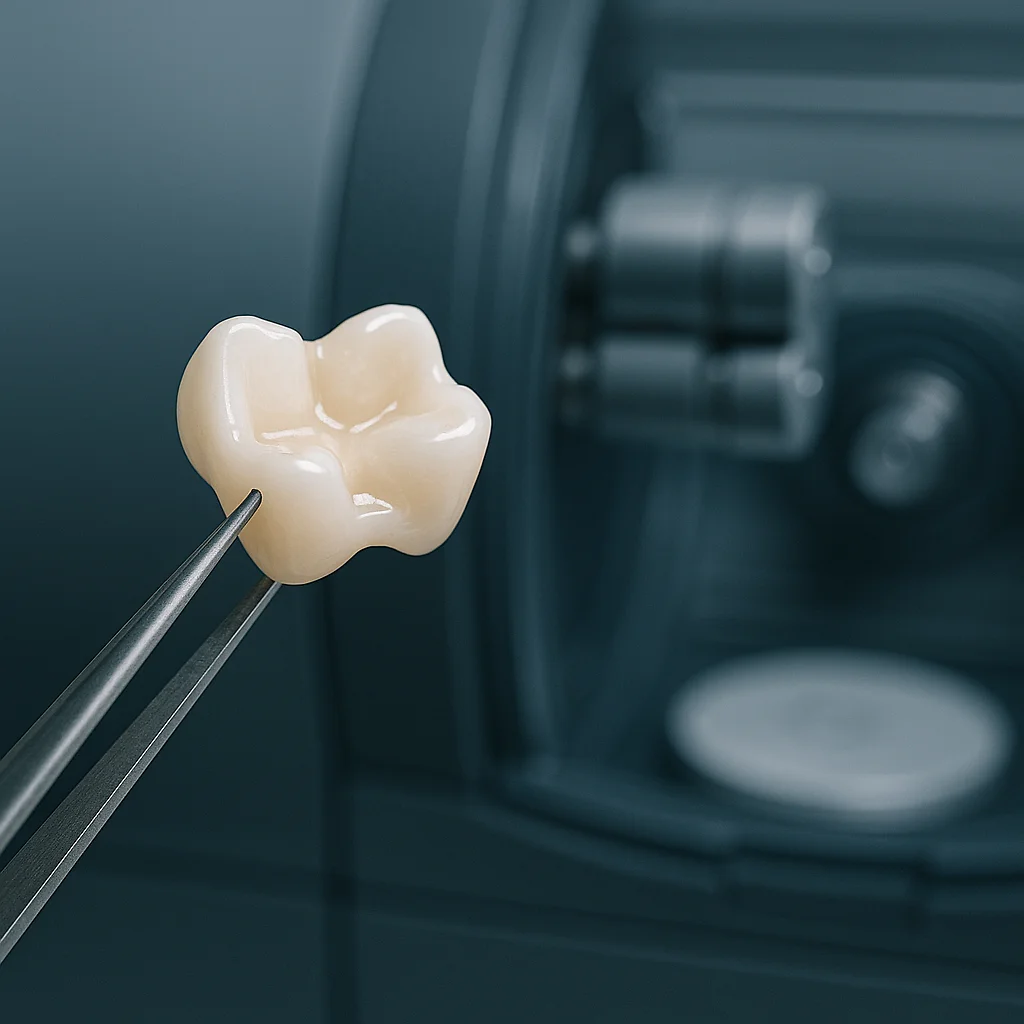
For us, the ceramic inlay is the treatment of choice when aesthetics and long-term durability are priorities. Unlike composite fillings, it is not shaped by hand in the mouth but is precisely fabricated in a dental lab based on an impression. Ceramic does not change in the mouth and remains stable over time.
The hardness matches that of a natural tooth, so the tooth and the filling wear down at a similar rate, and the chewing force is similar to that on a natural tooth. This makes it possible to restore even larger defects or entire cusps using partial crowns. The biggest advantage is durability: as long as the tooth does not develop new cavities elsewhere, the lifespan is practically unlimited. There are inlays that still look as good as new even after thirty years. The cost is higher due to the complex manufacturing process, but over time, they are often more cost-effective.
Features at a Glance
- Durable: With proper care, they remain stable for a long time, often for more than thirty years.
- Aesthetic: Like artificial tooth enamel, it's barely noticeable even up close.
- Stable: Abrasion-resistant, with a hardness comparable to that of tooth enamel.
- Application: Ideal for larger defects and heavily loaded posterior teeth.
First, the tooth is prepared and the defect is precisely assessed. The inlay is then fabricated in the lab using modern techniques such as CAD/CAM or CEREC, after which it is precisely fitted and permanently bonded to the tooth.
Composite Fillings: Aesthetic and More Affordable
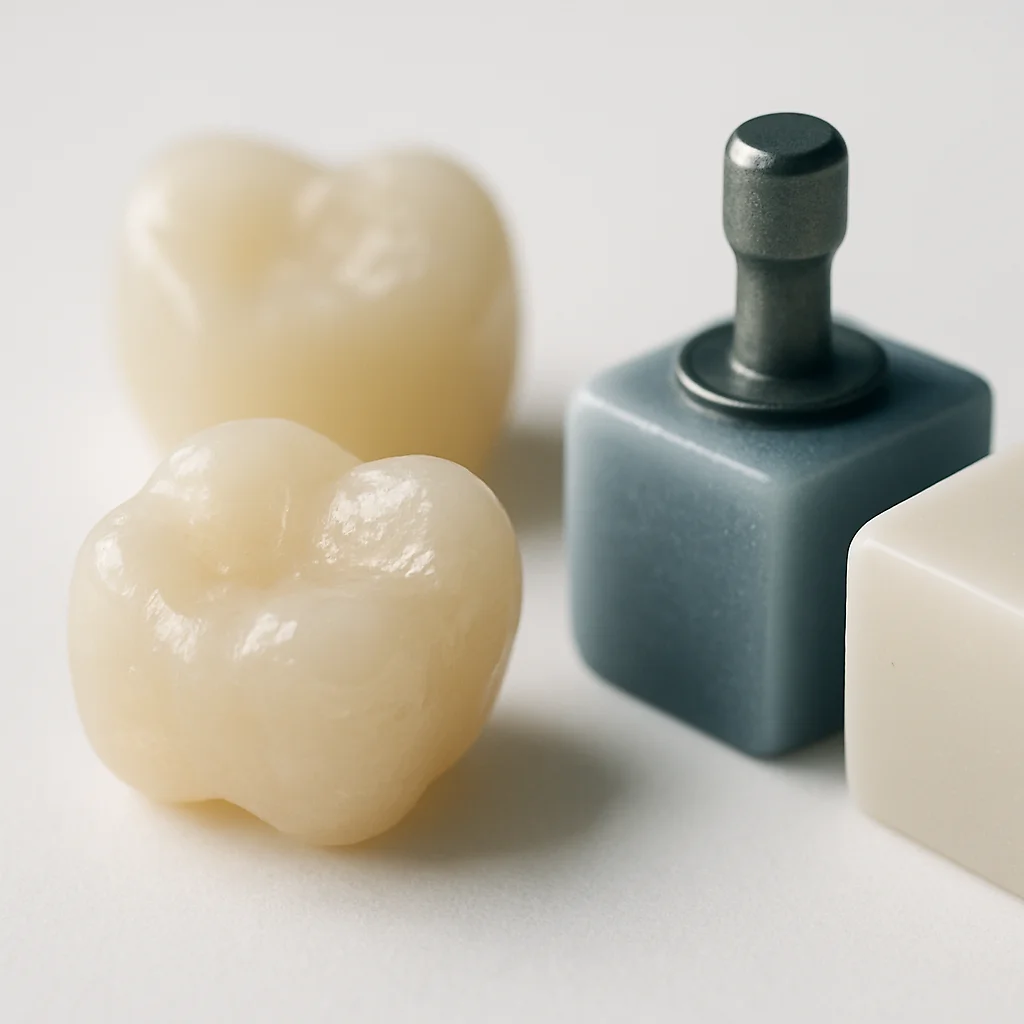
For cosmetic reasons and because it is less expensive than porcelain, tooth-colored plastic—known as composite—is now the most commonly used filling material. Thanks to its excellent aesthetic properties, it is a tried-and-true standard choice, particularly for the front teeth and for smaller fillings.
As good as composite is for small defects, it has its limitations in the heavily loaded posterior region. A medium-sized composite filling in that area often starts to leak again after an average of three to six years and must be replaced. Because some healthy tooth structure is lost each time this happens, the filling gets larger over time. This is due to the material’s shrinkage during curing, which can cause stress in the tooth and lead to fine marginal gaps. That’s why we apply the material in several thin layers to minimize shrinkage. For larger, heavily loaded defects, a ceramic inlay is the more durable choice.
Features at a Glance
- Tooth Colors: Matches the color of your teeth exactly; virtually invisible.
- Minimally invasive: Gentle; for minor defects, often without anesthesia.
- Cheaper: More cost-effective than ceramic, ideal for small to medium-sized defects.
- Borders: In a loaded posterior tooth, it is less durable than ceramic.
The procedure is completed in just a few steps and usually takes about 30 to 60 minutes. First, the tooth is prepared: the enamel margins are beveled, and the decay is removed. Next, we cure two thin bonding layers and treat the tooth surface with phosphoric acid to ensure the filling adheres securely. We then apply the composite in several thin layers, curing each layer individually with a curing light. Regarding costs: High-quality composite fillings are usually not fully covered by insurance. Basic insurance generally covers the amount equivalent to an amalgam filling, which is about CHF 100 to 200.
Ceramic Inlay
- Top-of-the-line model—our recommendation
- Just like real enamel—the ultimate in aesthetics
- Virtually unlimited shelf life, often more than 30 years
- Ideal for larger, heavily loaded defects
Composite Filling
- Tooth-colored and more affordable
- Ideal for the front teeth and for small defects
- Gentle, often without anesthesia
- Replace in the posterior region after a few years
Amalgam: A History of Risks
For decades, amalgam was the standard material—a mixture of about 60 percent silver, 40 percent mercury, and other heavy metals such as copper and tin. Although it is durable, with a lifespan of nine to twenty years, it is subject to corrosion in the mouth, which can lead to leaky edges and new cavities. Due to health concerns regarding mercury, we no longer use amalgam in our practice.
In line with our focus on environmental dentistry, we also offer—in collaboration with medical partners—an assessment of heavy metal exposure and detoxification following amalgam removal. This is because people with various metals in their mouths, in particular, may have elevated levels due to electrochemical processes.
Care and Durability
How long a filling lasts depends not only on the material but, above all, on how well it is cared for. Thorough brushing, professional dental hygiene at the dentist’s office, and regular checkups ensure that the filling remains functional and secure over the long term and help prevent new cavities from forming under the filling.
Fillings in Kilchberg
Today, modern fillings offer many options for restoring a cavity in a way that is both functional and aesthetically pleasing. At our practice in Kilchberg, we specialize in metal-free fillings and provide personalized advice on which solution is best for your specific situation. Our goal is to keep your teeth healthy for the long term.
Dr. Jens Tartsch's Practice, Kilchberg
About fifteen minutes from Zurich Central Station and right next to the Kilchberg train station. If you have any questions about fillings or choosing the right materials, we’d be happy to discuss them with you in person.


 German
  English
  German (Switzerland)
  Italian
  French