
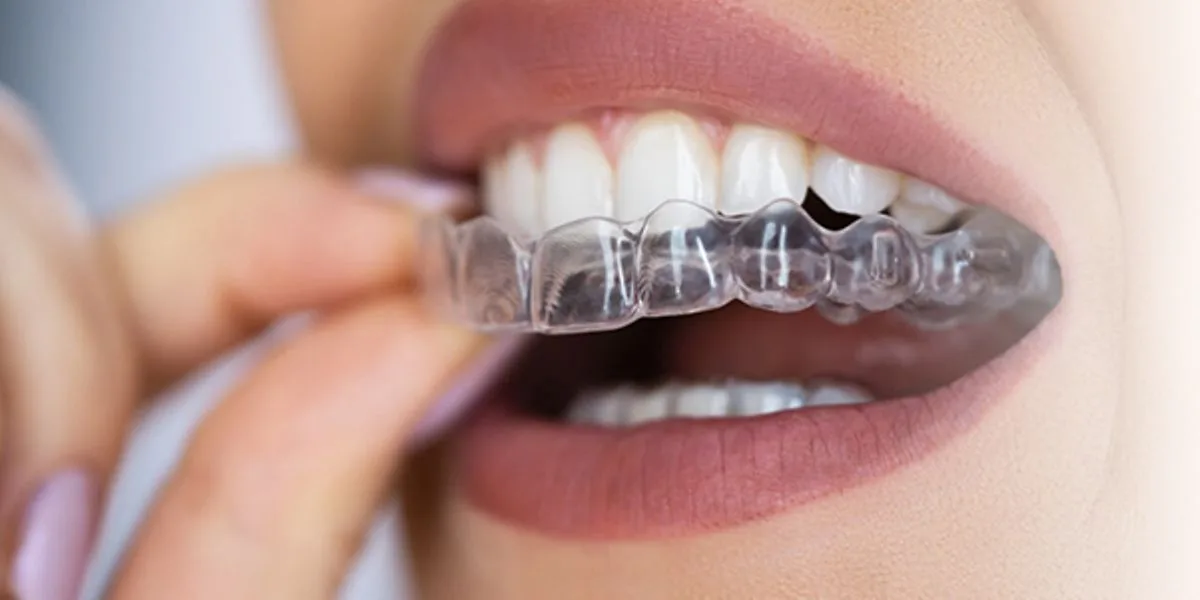
Many adults want straight teeth but are put off by the usual fixed metal braces—the ones we all know.
However, there is a new method for correcting misaligned teeth that is virtually invisible: Invisalign.
Invisalign
In Invisalign treatment, a series of clear plastic aligners is created based on digital planning; these aligners gradually move the teeth into the desired position. They work similarly to fixed braces, but without any brackets.
Advantages of Invisalign
- The rails are removable and almost invisible.
- The aligners can be removed for 2–3 hours a day, for example, to eat or for special occasions.
- Teeth cleaning can be performed as usual without any problems.
- The duration of treatment is similar to that of fixed braces.
- Using the computer simulation, you can see the treatment results in advance.
The Invisalign system is unsuitable for
- Children with incomplete tooth change or tooth eruption
- poor oral hygiene
- for the correction of skeletal dysgnathia (malocclusions of the jawbones)
Treatment procedure
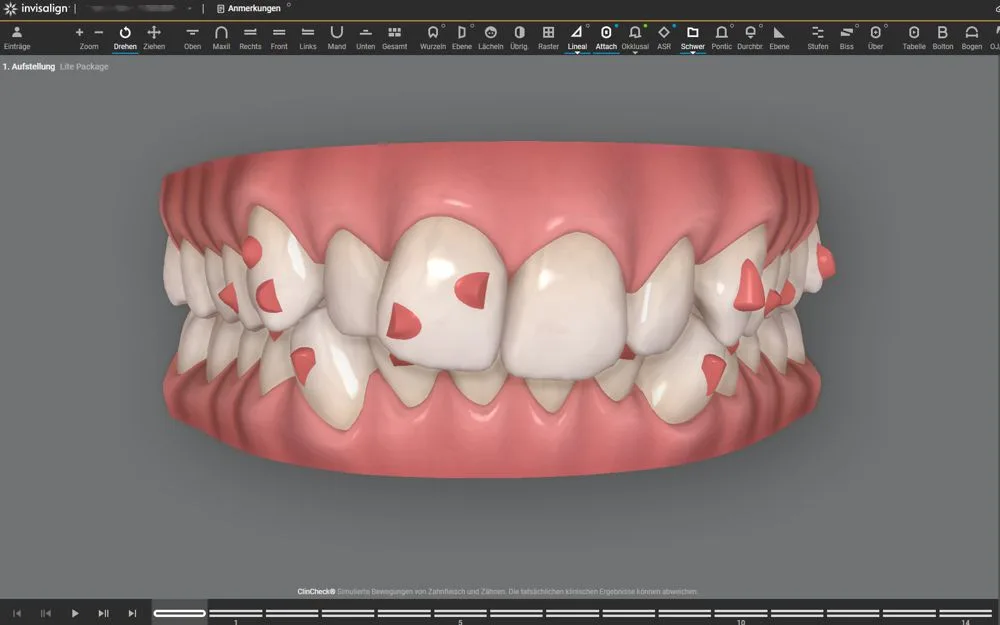
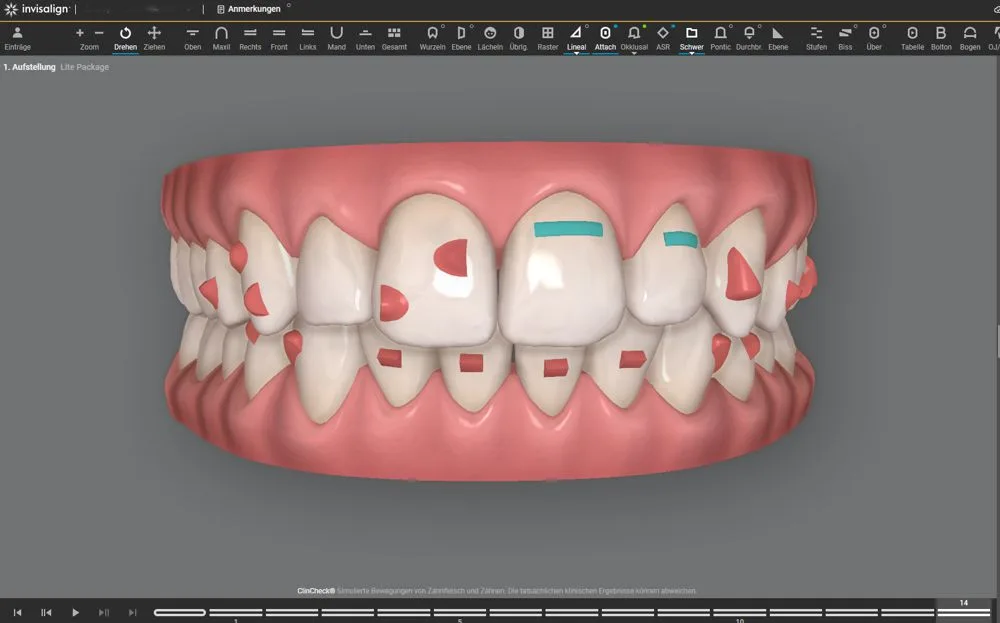
Impressions are taken of both jaws, sent to Align Tech in San Francisco, and scanned into a computer in three dimensions—or digitized—there. Based on this, a computer simulation of the desired tooth movements (ClinCheck) is created according to our specifications, which we review, verify, and, if necessary, correct together with you. This means you can see the expected result of the treatment even before it begins.
If the simulation matches the desired treatment goal, the aligners are manufactured by Align Tech. Each aligner should be worn for approximately 14 days. The aligners apply force to the teeth, gradually moving them into the position previously determined by computer. You will receive a new aligner at the office every 2 weeks, at which time the progress of your treatment will also be monitored.
To prevent the teeth from shifting back, a retainer (a wire archwire or a special splint) is fitted at the end of treatment, as is necessary with any orthodontic treatment.
More on invisible braces
This guide walks you through the aligner treatment process, from planning to retainers, and explains who it is suitable for.
 German
  English
  German (Switzerland)
  Italian
  French