
How do two-piece ceramic implants perform in the day-to-day operations of a dental practice? We explored this question through a scientific analysis of our treatments. Here, you’ll learn what we investigated, what the study’s findings show, and what this means for your treatment.
What the Study Is About
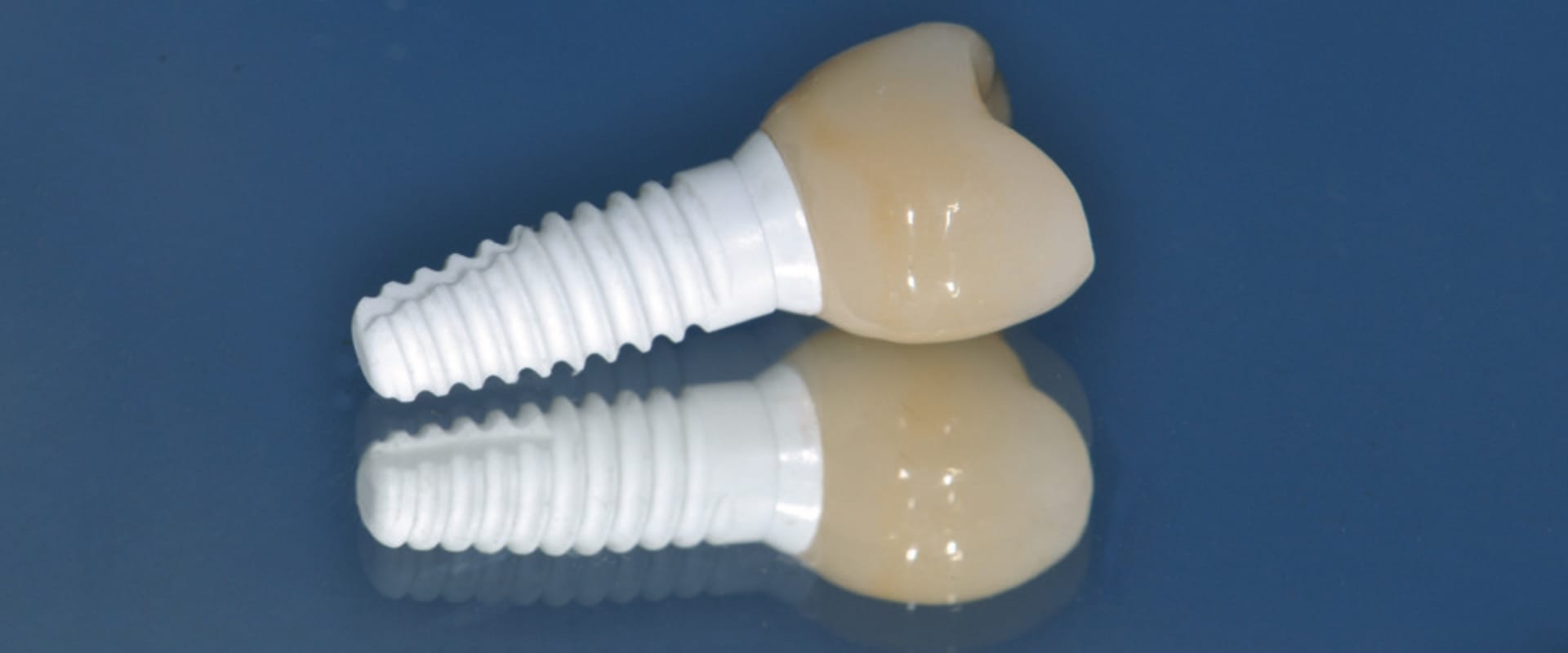
A dental implant replaces the root of a missing tooth. In a two-piece system, the implant body—which is anchored in the bone—and the abutment for the dental prosthesis are separate components. In our study, we examined screw-retained implants made of zirconia ceramic.
According to the publication, the NobelPearl and Zeramex XT systems used are structurally identical and come from the same production line. We evaluated how many implants remained in place during the follow-up period and how the bone developed at the implant margin. The results apply to both of these systems.
As we have examined
We conducted a retrospective analysis of the treatments and follow-up visits at our practice—that is, as they actually took place in our day-to-day practice. Experts refer to this as a retrospective study.
Between July 2017 and December 2024, Dr. Jens Tartsch placed a total of 167 implants in 106 patients. The follow-up period lasted an average of 39.1 months—just over three years. It ranged from 4.0 to 88.2 months.
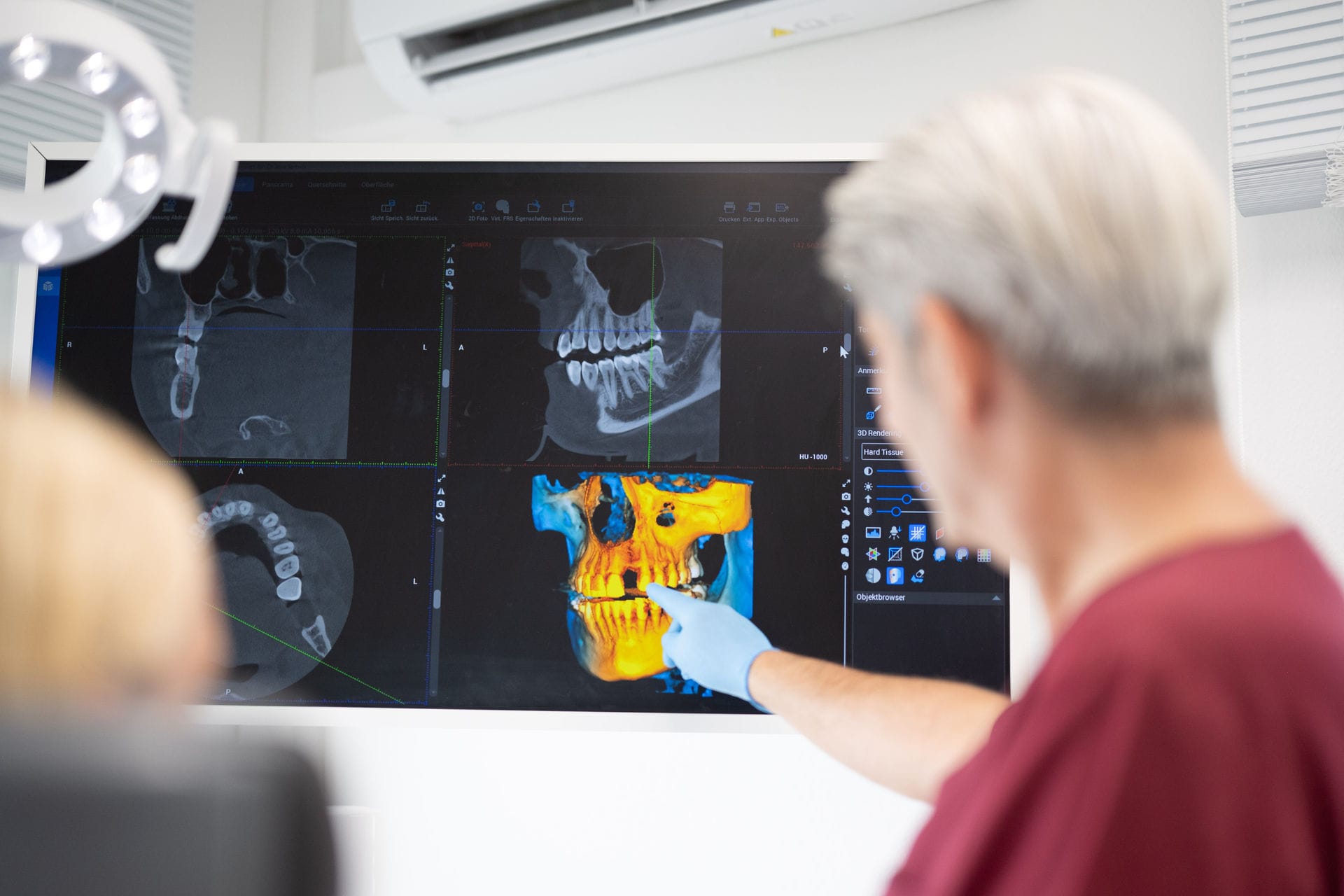
Patients were invited to annual follow-up visits. During these visits, implants, dental prostheses, and X-rays were evaluated. In addition, the research team examined the implant surfaces. The data and X-rays were analyzed at the University of Gothenburg. The study protocol was approved by the Zurich Cantonal Ethics Committee.
What the Results Show
98.2% of the implants placed remained in place
During the follow-up period, which varied in length, three of the 167 implants were lost. This results in the effective survival rate of 98.2% reported in the publication. Two of the losses were due to implant fractures; in one case, the implant did not integrate firmly into the bone.
This figure represents the percentage of implants that remained in place during the observation period.
A second calculation takes into account the varying lengths of the observation periods. It yields an estimated survival rate of 97.3% after seven years.
Changes in the Bone at the Implant Margin
The X-ray analysis compared bone levels at later follow-up visits with those at the time of final prosthesis placement. For follow-up visits at 6 to 12 months, the average bone loss was approximately 0.45 mm; for those at 24 to 36 months, it was approximately 0.53 mm.
According to the authors, bone resorption occurred primarily during the first year after the dental prosthesis was placed; thereafter, bone levels remained stable. They characterize the bone loss as moderate and consistent with what has been described in reviews of ceramic implants.
What does this mean for your treatment?
The two-piece ceramic implants studied demonstrated a high survival rate in everyday clinical practice. They may therefore serve as a metal-free alternative to titanium implants.
We will determine whether a ceramic implant is a suitable option for you based on your medical findings, your overall health, and the planned treatment. We will also discuss any potential risks and alternatives with you.
How We Interpret the Results
The study reflects the day-to-day operations of a single dental practice: Dr. Jens Tartsch personally placed all of the implants. This ensures a consistent treatment protocol. As with any study conducted at a single practice, the results therefore cannot be applied directly to other practices. The authors recommend further long-term studies to confirm the results.
Scientific Collaboration and Original Publication
Dr. Jens Tartsch, as the first author, published the study together with Bruno Chrcanovic, Ann Wennerberg, Ralf-Joachim Kohal, and Tomas Albrektsson. Ann Wennerberg and Tomas Albrektsson are researchers at the University of Gothenburg, and Ralf-Joachim Kohal is a researcher at the University of Freiburg (Germany). Bruno Chrcanovic, who was not involved in the treatments, independently measured bone levels on the X-rays at Malmö University.
Original publication: Jens Tartsch, Bruno Chrcanovic, Ann Wennerberg, Ralf-Joachim Kohal, Tomas Albrektsson. «Two-Piece Zirconia Implants: An Office-Based Retrospective Study with Up to 7 Years and a Mean of 3 Years of Follow-up.». The International Journal of Oral & Maxillofacial Implants. 2026;41(Supplement 2):e1–e16. DOI: View the scientific study (DOI 10.11607/jomi.11469).
Information regarding conflicts of interest can be found in the original publication.
Frequently Asked Questions About the Study
What does a survival rate of 98.2% mean?
Of the 167 implants studied, three were lost during the follow-up period, which varied in length. The survival rate of 98.2% represents the proportion of implants that remained in place. It is not a guarantee for individual cases.
Were all ceramic implants examined over a seven-year period?
No. The follow-up period lasted an average of 39.1 months—just over three years—and ranged from 4.0 to 88.2 months.
Were ceramics and titanium compared directly?
No, the study only examined ceramic implants. It shows that these can be an alternative to titanium. We'll discuss which material is right for you based on your test results.

Do you have questions about ceramic implants?
We'd be happy to explain what the results mean in relation to your questions and what options are available to you.
 German
 English
 Italian
 French